

Stress affects us all every day, whether it is exciting stress or anxiety provoking stress, it takes its toll.
Stress produces Cortsiol, Adrenaline, and DHEA to help you handle stress every day. DHEA is often under appreciated in its roll to counter balance Cortisol and keep you calm and energized. It is a natural healing hormone produced primarily by the adrenal glands, that counter balances Cortisol and serves as a precursor for sex hormones like estrogen and testosterone. Its main functions include maintaining hormonal balance, supporting your immune function, boosting energy while keeping you calm. DHEA levels peak in early adulthood and decline with age. Benefits include potential improvements in libido, bone density, and mood.
Where does Your Body Make DHEA?
• Primary Source: DHEA is produced by the adrenal glands, which are located on top of the kidneys.
• Secondary Sources: Small amounts are also produced in the ovaries, testes, and brain.
Purpose of DHEA
The primary purpose of DHEA in the body is to ensure a steady supply of sex hormones as natural production declines with age. In medicine, it is used to combat age-related decline in vitality and to treat specific hormone imbalances.
Age Associated Decline of DHEA
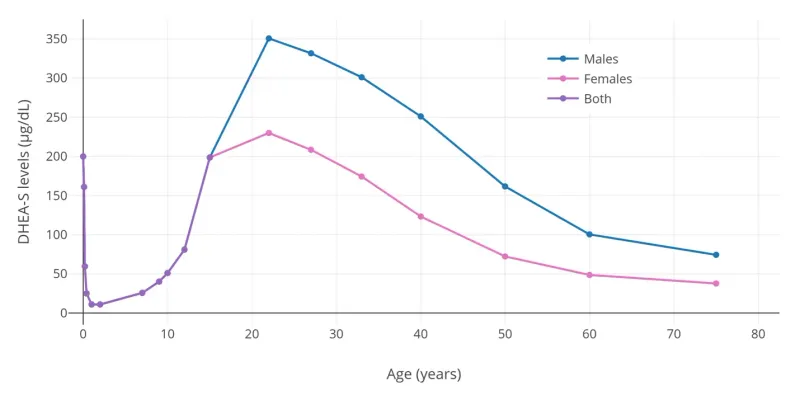
DHEA levels peak between ages 20–30 and decline by approximately 80%–90% by ages 70–80 in both men and women. This decline, known as adrenopause, typically progresses at a rate of 2%–5% per year after age 30, with levels by age 70–80 reaching only 10%–20% of their peak values.
• Gender Differences in Decline: While both sexes experience a drastic decline, men generally have higher baseline levels, with studies indicating DHEA levels in young women are 10%–30% lower than in young men.
• Annual Rate: Following the peak, DHEA production diminishes by about 2% each year.
• Age-Specific Declines:
o By age 70, DHEA/S levels are reduced to roughly 20% of their peak values.
o By ages 85–90, the reduction can be as much as 95%.
• Optimal DHEA Levels: The optimal DHEA blood serum level for women is in the range of 150 to 280 ug/dl, while the optimal range for men is 400 to 500 ug/dl.
• Significance: This reduction is associated with decreased vitality, impaired cognitive performance, and lower bone mineral density.
DHEA Function in the Human Body
• Hormonal Building Block: DHEA acts as a precursor hormone, converting into active androgen (testosterone) and estrogen hormones.
• Metabolic & Immune Support: It influences metabolism, enhances immune response to infections, and acts as a neurosteroid.
• Cellular Protection: DHEA modulates inflammatory responses and provides neuroprotection.
Benefits of DHEA (Natural & Supplemental)
• Male & Female Health: May boost libido, improve energy levels, and increase strength.
• Bone Density: Studies suggest supplementation can improve bone density in older individuals.
•Fertility: Research indicates National Institutes of Health (NIH) | (.gov) it may improve ovarian function and increase pregnancy chances. May be used to support ovarian function and egg quality in women.
• Mood & Cognition: Used to help improve cognitive function, memory, and combat feelings of depression.
• Adrenal Insufficiency: Helps restore and improve the quality of life in individuals with low adrenal function.
• Other Uses: It is sometimes utilized to offset excess Cortisol and to treat obesity. Additional research show that DHEA may provide protection against the auto-immune disorder lupus, though evidence varies.
Purpose of DHEA
The primary purpose of DHEA in the body is to ensure a steady supply of sex hormones as natural production declines with age. In medicine, it is used to combat age-related decline in vitality and to treat specific hormone imbalances.
Natural Ways to Boost DHEA
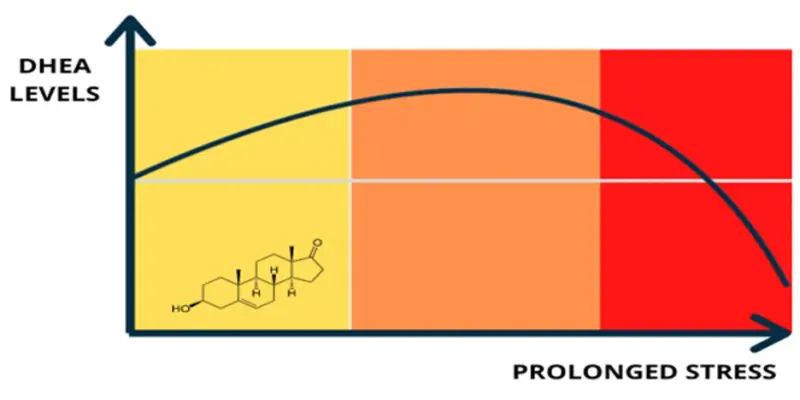
• Manage Stress: Chronic stress increases cortisol, which suppresses DHEA. Practices like meditation, yoga, or consistent, quality sleep can help.
• Exercise Moderately: Regular, moderate-intensity exercise—such as brisk walking, cycling, or strength training—boosts DHEA. Excessive, high-intensity exercise can actually lower it
• Dietary Adjustments:
o Increase Fiber: Higher fiber intake is associated with higher DHEA levels.
o Eat Healthy Fats: Consume avocados, olive oil, and fatty fish to provide the necessary building blocks for hormone production.
o Specific Foods: Include foods rich in nutrients that support adrenal function, such as leafy greens, eggs, nuts, and seeds.
Supplementation (Consult a Doctor who specializes in Hormones):
o DHEA Supplements: Typically 5 -10mg are recommended for women who are found to have low serum levels and 25-50 mg recommended daily to achieve optimal serum levels in men.
o Ashwagandha: An adaptogenic herb that can help regulate the Hypothalamic Pituitary Axis (HPA) axis and support DHEA levels. Ashwagandha has been shown to gently calm the senses, lower excessive cortisol in men and women and raise testosterone in men.
oBupleurum Chinense (Chinese Thoroughwax): possesses a mild sedative and pain relieving effects, as well as the ability to enhance adrenal function. Bupleurum has been shown to raise the level of beta-endorphin (the “feel good” hormone associated with runner’s high) and reduce the levels of elevated serum cortisol (stress hormone) levels, specifically in cases of induced stress. Bupleurum also increases the functional ability of the adrenal glands to respond to stress.
o Vitamin D: Ensures proper adrenal function primarily by regulating the Hypothalamic-Pituitary-Adrenal (HPA) axis, which manages the body’s stress response and cortisol production. It helps prevent prolonged, excessive cortisol elevation, reducing the risk of burnout, and aids in controlling inflammation associated with chronic stress.
o Vitamin D Receptors are found in the brain, hypothalamus, pituitary gland, and adrenal glands, allowing vitamin D to modulate cortisol levels. It helps to prevent the “burnout” phase where the adrenals fail to produce sufficient cortisol after periods of high stress.
Precautions/Recommendations
• Avoid Extreme Diets: Switching from a plant-based to a conventional diet may cause a 20% drop in DHEA.
• Test Your Serum DHEA, Cortisol and Vitamin D Levels: As DHEA levels naturally decline with age, are diminished by excess Cortisol and regulated by Vitamin D, monitoring serum levels of these three hormones through annual blood testing is an important aspect of proactive optimal health maintenance while taking hormone supplements.
• Side Effects: While supplements can provide many amazing health benefits, taking excessive amounts of DHEA without testing can cause side-effects, including acne, oily skin, and increased body hair. Excessive DHEA over prolonged periods can cause downstream overflow into Estrone and Estradiol if not balanced by optimal levels of Progesterone and Estriol. This imbalance can increase the risk of breast cancer in women and prostate cancer in men. You need to test your hormones at least annually and keep them in balance.
• Life and optimal health cannot exist without optimal levels of your hormones. Optimal levels will help create optimal health, vitality and longevity. Excesses can confer unnecessary health risks, which can be avoided by periodic testing of all your hormones and the guidance of a doctor with an advance certification in hormone therapy from the World Society of Anti-Aging Medicine, or the American Academy of Anti-aging Medicine.